

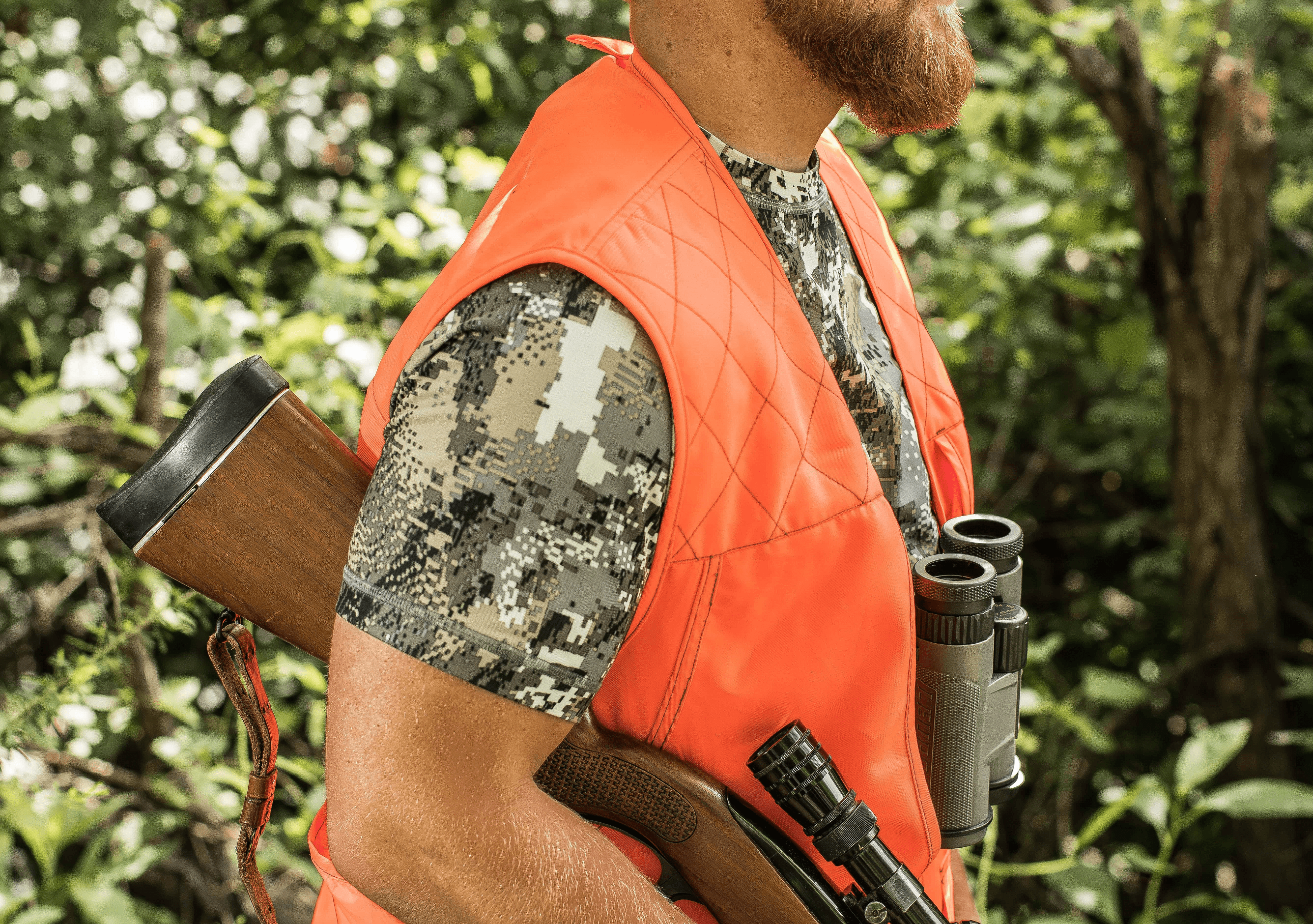
You already know what shoulder pain from rifle recoil feels like. It shows up after a few solid weekends of range time getting your rifle dialed in for elk season, long before opening day ever arrives. Maybe it starts as a dull ache under your collarbone. Maybe it is a deep bruise you do not notice until you peel your shirt off that night. Either way, it changes how you shoot. You start flinching before the trigger breaks. You start dreading the range session that used to be the best part of your week. Nobody wants to walk into their hunt with a shoulder that is already worn out before the season even starts. This article breaks down why recoil hurts more than it should, what is actually happening to your shoulder, and what you can do about it before next season.

The Short Answer:
Rifle recoil causes shoulder pain because your body absorbs the same kinetic energy that drives the bullet forward. A .300 Win Mag generates about 26 foot-pounds of recoil energy per round with a typical 180-grain load. That energy adds up over a day of hunting, building the kind of repeated microtrauma orthopedic doctors see in any joint that takes on repetitive impact. The real fix is reducing recoil at the source, not just cushioning the pain after it hits.
Why Rifle Recoil Hurts More Than You Expect
Recoil hurts because your shoulder has to absorb energy the rifle cannot keep for itself. Every time the powder ignites, Newton’s third law sends an equal and opposite force straight into your shoulder pocket. There is no way around the physics, only ways to manage it.
A .30-06 loaded with a 180-grain bullet generates about 20 foot-pounds of recoil energy in a typical field rifle, according to Sportsman’s Warehouse’s published recoil data. Step up to a .300 Win Mag with the same 180-grain bullet weight and you are looking at close to 26 foot-pounds, roughly 28 percent more punishment per trigger pull. That same source notes that anything over 20 foot-pounds can leave a shooter with a sore shoulder, and puts 15 foot-pounds as about the most an average shooter can comfortably handle over a long day of hunting or practice. Now multiply that by every sighter, every practice string, and every shot you take once the season opens. A single shot rarely does the damage. It is the accumulation that puts hunters on the bench.
This matters more as you get older. Shoulders lose cartilage and connective tissue resilience over time, so the same 26 foot-pounds that barely registered at 30 can leave a deep bruise at 55. That is not weakness. That is biology, and it is exactly why more experienced hunters start paying closer attention to recoil instead of just toughing it out.
The Real Damage Happens Over a Full Day, Not One Shot
Most shoulder pain from hunting rifles is cumulative, not sudden. You will not feel it on shot one or even shot five. You feel it that night, or the next morning when you reach for your coffee and your shoulder reminds you what you did to it.
Think about a real week in the field. You sight in your rifle at the range on Tuesday, twenty rounds to confirm zero and check a new load. You hunt Thursday through Sunday, and on the third day you finally get a shot at a bull that has you shaking with adrenaline. That shot lands fine. The pain shows up an hour later, a deep ache that was not there before, and it is still there two days after you get home.
This pattern is a repetitive strain injury, or cumulative trauma disorder: a condition that develops when repeated microtrauma builds up faster than the body can repair it, rather than from one single traumatic hit. A rifle stock slamming into the same shoulder pocket fifty times in an afternoon creates exactly that kind of repeated stress, and recovery time between sessions matters as much as the force of any single shot. That kind of repeated impact is also what builds a flinch. Your body starts anticipating the hit before the trigger breaks, and your muzzle dips just enough to throw the shot off. The fix is not toughness. It is reducing how much force your shoulder has to absorb in the first place, and giving it enough recovery time between sessions.
Simple Adjustments That Cut Felt Recoil Before You Spend a Dime
You can cut felt recoil today with your stance and your mount, before you buy a single piece of gear. Lean into the rifle instead of standing straight up. A slight forward lean lets your whole body share the load instead of your shoulder taking it alone.
Get the stock high and tight in your shoulder pocket before the shot, not after. A loose mount lets the rifle build momentum before it hits you, and that gap is where the sharpest, most painful recoil comes from. Keep both hands firm on the rifle. A death grip does not help, but a loose grip lets the rifle move more before your body catches it.
Ammo choice matters too. Dropping from a 200-grain bullet to a 150-grain bullet in the same cartridge can meaningfully cut recoil energy without giving up much for most hunting distances. If you are sighting in or running drills, mixing in a few lighter practice loads can save your shoulder for the hunt itself. None of this costs anything beyond a little attention to form, and all of it stacks with any gear upgrade you make later.
The Fix a Lot of Hunters Stumble Onto
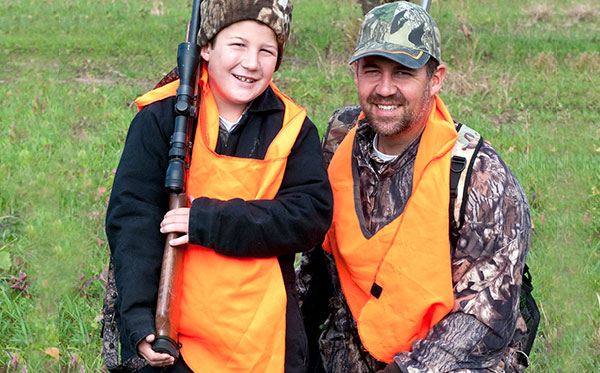 A lot of hunters find their way to better recoil pads the hard way, usually after a season that left a shoulder too sore to enjoy. FalconStrike built its recoil pads around hydraulic dampening technology borrowed from aircraft landing gear instead of standard rubber compounds. A rifle’s recoil can push close to 2,200 pounds of force into your shoulder in a few thousandths of a second, and rubber alone was never built to handle that kind of load.
The pad works in two stages. An elastic bladder expands by 10 percent or more on firing, which spreads the force across a larger area of your shoulder instead of one hard point of contact. Then a hydraulic dampener, the same category of part used to soften the shock of an aircraft landing, converts peak force into heat that gets released evenly instead of slamming into your shoulder all at once.
The difference shows up in the numbers. FalconStrike pads are built to deliver up to 80 percent less felt recoil energy compared to standard rubber pads, along with 35 percent less muzzle lift, 25 percent less peak force, and 35 percent less rock back. For a hunter running a .300 Win Mag or anything in that class, that is the difference between a shoulder that is sore on day two and one that is ready to go on day four.
What sets it apart further is the fit. FalconStrike’s Hydraulic Custom-Fit Recoil Pad uses a mounting plate that matches your stock’s contour exactly. A pad that sits wrong on your shoulder can undo a lot of the benefit, so getting that fit right matters more than it sounds like it should. If you would rather skip the measuring, FalconStrike also offers a Multi-Fit pad with a self-adjusting skirt that blends to the stock automatically. For hunters who spend real money on optics, ammo, and travel to hunt, a properly fitted recoil pad is one of the cheaper upgrades that actually changes how many good days you get in the field.
Frequently Asked Questions
How much rifle recoil is too much for hunting?
Published recoil data shows most shooters start feeling real discomfort above 15 foot-pounds of recoil energy, and anything over 20 foot-pounds can leave a shooter with a sore shoulder. A .300 Win Mag sits close to 26 foot-pounds with a typical 180-grain load, which is manageable for most hunters but adds up fast without the right gear or form.
Does a recoil pad actually reduce shoulder pain?
Yes, a quality recoil pad reduces the peak force and energy transferred to your shoulder with every shot. Standard rubber pads help some, but dampening materials designed for high-impact absorption, like the aerospace-derived technology in FalconStrike pads, cut felt recoil far more than basic rubber.
Can shoulder pain from recoil actually hurt my accuracy?
Absolutely. Once your shoulder starts anticipating pain, you tend to flinch or push against the rifle right before the shot breaks. That small movement is enough to pull your muzzle off target, especially at longer hunting distances where a fraction of an inch at the muzzle becomes several inches downrange.
What is the difference between recoil energy and felt recoil?
Recoil energy is the objective, measurable force generated by a cartridge, usually expressed in foot-pounds. Felt recoil is what your body actually experiences, which depends on your stance, your gun’s fit, your recoil pad, and your own sensitivity. Two hunters shooting the same rifle can report very different felt recoil.
Do custom-fit recoil pads make a real difference over standard ones?
Yes. A pad that does not match your stock can sit wrong on your shoulder, which reduces how well it absorbs impact no matter how good the material is. FalconStrike’s Custom-Fit Recoil Pad uses a mounting plate matched to your stock’s exact contour, so the pad stays positioned correctly and you get the full benefit of the dampening technology. A Multi-Fit version is also available if you would rather skip the measuring.
How long does recoil-related shoulder pain usually last?
Mild soreness from a day of shooting often clears up within a day or two. Deeper bruising from a full hunting season, especially with a hard-kicking magnum cartridge, can take a week or more to fully resolve. If pain lingers well beyond that or worsens with continued shooting, it is worth having it checked out rather than shooting through it.
The Bottom Line
Shoulder pain from rifle recoil is not something you have to accept as the cost of hunting hard-kicking calibers. Better form, smarter ammo choices, and a recoil pad built to actually absorb impact can keep you comfortable and accurate through a full season. Ready to protect the shooting years you have left? Visit FalconStrikeUSA.com to find the right pad for your rifle.